Review: The Other Mrs.

The Other Mrs.

If you’ve read any of my other reviews either here or on Goodreads, you’ve probably noticed a common thread: I can’t help but compare every psychological thriller to Mary Kubica. And almost without fail, I find the book/author I’m holding up for scrutiny to be lacking in comparison. I have a deep love for her complex female characters and intricate plots. The Other Mrs. (Not to be confused with The Other Mrs. Miller, which is another novel in the same genre and of the same quality as this one) is Kubica’s latest effort, and it serves up all of the goodness we’ve come to expect from the author.
Female-centered psychological thriller? Check.
Unreliable narrator(s)? Check.
Twists and turns? Check.
Quick pacing? Check!
Several times, I found myself thinking ‘ugh, this is so predictable, it’s obviously the husband/the creepy son/the troubled teen girl/the jilted ex-wife’, lured into believing at various turns that I had outsmarted the author, but these are almost all red herrings. In the end, Kubica successfully pulls the rug out from under you, which is all the more shocking because she’s never deliberately hiding information as so many more amateur authors do. Instead, she trusts in her reader, knowing we’ll fill in the blanks (incorrectly), thus helping veil the truth.
All of that being said, this isn’t my favorite of her books because of the way all of the truths are veiled. There’s a mental illness plot point here that I found to be a bit of a cop out. Though it is well plotted, it ultimately left me feeling a bit jipped. It’s sort of like the cliche “it was all just a dream” ending, but with more eye rolls, because it has the added element of being a bit far-fetched, too.

In comparing this to her other novels, I’d say it’s firmly in the high-middle– below The Good Girl and Pretty Baby, but above the rest. This feels much more polished and intentional than some of her recent books, which seemed like they had been rushed.

Rating: 3.75/5 stars, rounded up to 4 for Goodreads.

Buy The Other Mrs on Amazon here.

Review: The Love Solution

Image result for the love solution ashley croft


I’d give Ashley Croft’s The Love Solution a 2.5, as it really was just okay, but after having looked at the other reviews, I decided to round up to 3 stars (on Goodreads) because I don’t believe a book’s quality should be assessed based on the moral judgements of its readers. It’s one thing to say a book is poorly written, constructed, plotted, or its characters are one dimensional, etc. But to say ‘this book is not good because I disagree with the morality of the characters, choosing to use a love potion’, is silly. Not that I think the Love Bug story points add to the quality of the book as a whole; in fact, I actually think the book could’ve done without that bit entirely, and would’ve perhaps been stronger, as that whole back and forth was ultimately a bit pointless, and the characters and relationships were interesting enough on their own. Also, characters are meant to be flawed– and sure, maybe *you* are the kind of person who maintains utmost integrity, even in the face of heartbreak, and you would never succumb to your own desperate misery. But I’m not going to pretend for one single second that I couldn’t be led down a ‘dark path’, or that I’d label someone who did resort to something like a magic love pill as a ‘bad person’. Yeah, there are ethical issues with that– that’s precisely why we have Science Fiction (or, in this case, Romantic Comedies with Sci-Fi-Light elements), to extrapolate and tease out the potential pitfalls of such medical and technological advancements.

Outside of all that, The Love Solution is truly mediocre. It’s the kind of thing you pick up because you’ve exhausted everything other option, or because there’s a secondhand copy on sale for $1.99. Funny enough, after I wrote this review, I went to pull the Amazon link and it is indeed being offered for… $1.99. At least the publisher is aware what they have here, and they’re not price gouging their customers. It feels like it has been churned out, a bottom of the barrel tale that the author spruced up so she could make that next mortgage payment. It all feels very dated, in its language and domesticity, as if it was either created twenty years ago, or else is intended for an audience of senior citizens who prefer a more tame story. And, by the way, I don’t mean that as a cut down; I think it could be successful in assisted living book circles, and there’s not a ton geared towards that demographic.

Rating: 2.5/5 stars

Buy The Love Solution on Amazon here.

Image result for breathe in, cash out


Whoa, okay, so it’s been a while since I’ve posted here on the blog. This has been primarily due to an intense six months of work, but is also owing to a lack in solid, new releases. I’ve been going back through authors who I already like, for tried and true stories (i.e. I’ve read everything Taylor Jenkins Reid has written). But I’m back, friends.  And the best way to come back? Sharing a brand new author, with a brand new book– one that I actually liked! WHAT!? Yes. I have nothing snarky to say. Well.. Maybe a little something to the effect of “don’t look up the author’s own story or Instagram account before you read this”, but overall, I’d say this should go to the top of your TBR beach reads pile.

Let’s start with this: the PR department over at Atria clearly knows me a little too well, as Breathe In, Cash Out is pretty much tailored for me. As much as I relish in the cleverness and beautiful use of language in highbrow literary fiction, there’s really nothing like a solid piece of chick lit to get me excited. I know, I know, “chick lit” is no longer a phrase we use, but I say it in an entirely non-pejorative, proud of my not-so-dirty and not-so-secretive, way. That’s not to say that the genre is without its problems– it is, and I’d say they’re mostly of a qualitative nature; many of the offerings wind up being of the mediocre mommy porn variety, and let’s just say that’s not helping. But, okay, let’s look specifically at Madeleine Henry’s debut novel, about a young woman on Wall Street whose ambitions involve a different kind of upward (and downward, as in, ‘dog’) mobility than most of her peers. My enjoyment of this novel is likely owing to narcissistic tendencies, as I’m also an avid practitioner of yoga, with Ivy League credentials, working in a male-dominated field, dating a finance bro. The story hits home, yes, but I think there’s an informative component that sets it apart from may other offerings in the genre. If you come to this with a finance background, I would expect you’d pick up some yogic knowledge and perhaps some desire to self evaluate; if you come to this with a yoga background, you’ll likely learn a bit about finance, and the cutthroat atmosphere of working at the bottom rung of banking. In addition, the writing has a great bite to it, as if the author expects the reader to keep up without coddling.


Starred Rating: 4/5

Pre-Order Breathe In, Cash Out on Amazon here.

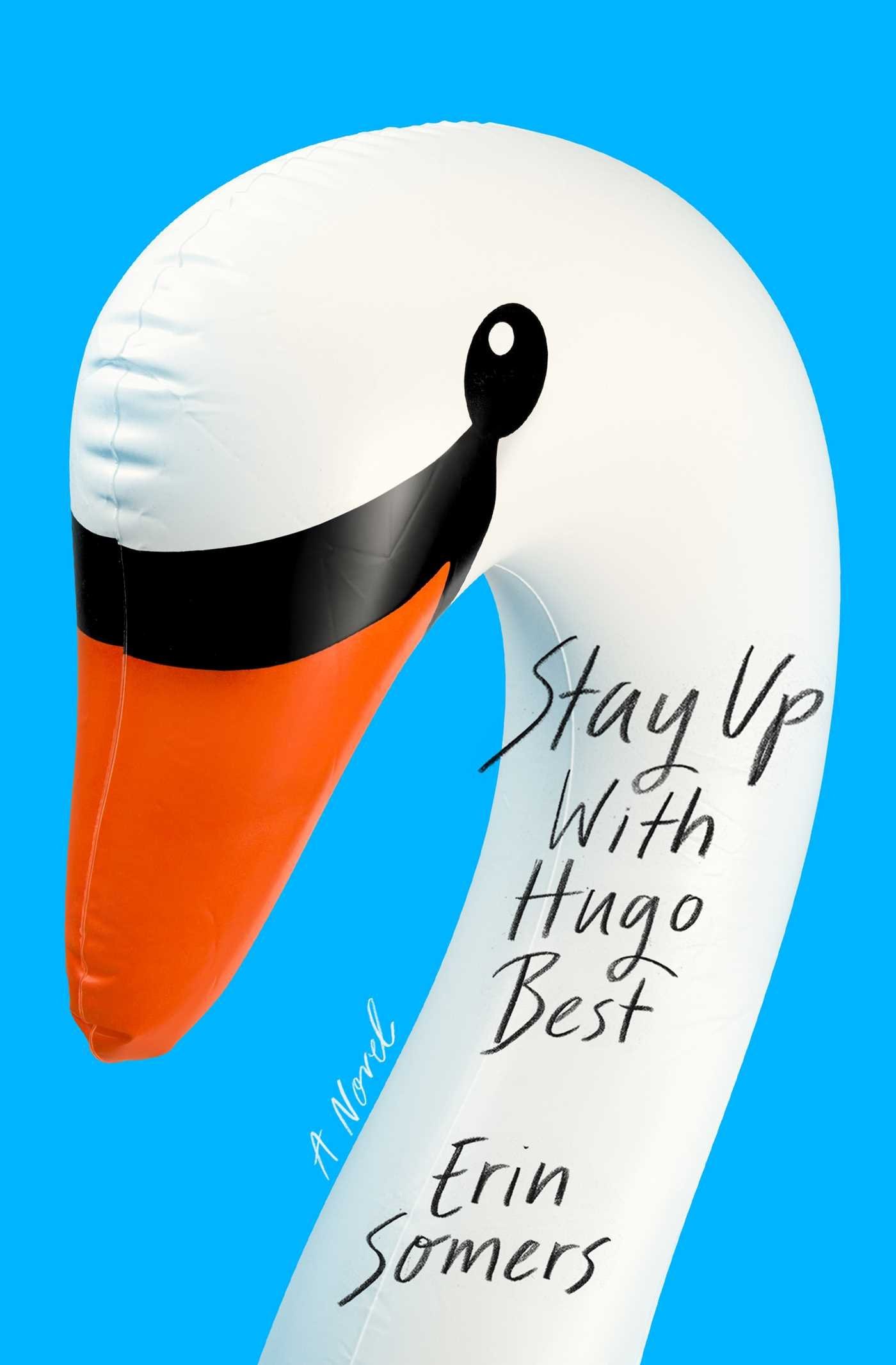
Review: Stay Up With Hugo Best

Image result for stay up with hugo best


I moved Stay Up With Hugo Best to the top of my list when I was approved to read it, as it sounded like the perfect thing for me, as a woman in entertainment with an affinity for comedy. I wanted to like it, I really did– and perhaps the issue was that my expectations were too high? To me, almost every attempt at humor or cleverness fell just short of being truly humorous or clever. It was actually frustrating, how many times I felt that “this is going to be it!” during the set up, only to be let down by the punch line. Despite the promising plot and characters, the story roams about, with nothing of import really happening. There was a lot of ‘tell’ here, rather than ‘show’, like an extended obituary– not even as interesting as a New Yorker profile.

Now, with all of that being said, Somers is a capable writer. There’s nothing truly bad here, and she’s actually quite good at constructing concise, clear sentences, and telling a story. It’s just that this particular story is like watching paint dry. Her writing actually makes the overall even worse, because, coupled with the overall concept, there’s so much potential here. A has-been, millionaire late night television host and his young, impressionable writer’s assistant spend the weekend together? That is a great hook! Give me something more! Give me the ‘wit’ and ‘hilarity’, the ‘enigma’, the ‘less predictable’, as promised in the description! After being thoroughly confused, I returned to the description to see whether I had mistaken the book; was this meant to be funny? YES. THEY PROMISED. I wanted more debauchery, more scandal, more romance, or at least more searing commentary from June about Hugo, or from Hugo, about the cultural climate. If it was meant to just reflect a sad reality, I think the description should reflect that and not use words like “hilarious”, because that sets the reader up for something… Well, HILARIOUS; not an understated, slow-burn character study. I’ve witnessed this same bad-branding/poor marketing in films, with Our Idiot Brother (starring Paul Rudd) and Funny People (starring Adam Sandler), which were both portrayed as being comedies in the trailers, but were ultimately more about the melancholy side of humor.
Rating: 2.5/5

Buy Stay Up With Hugo Best on Amazon here.

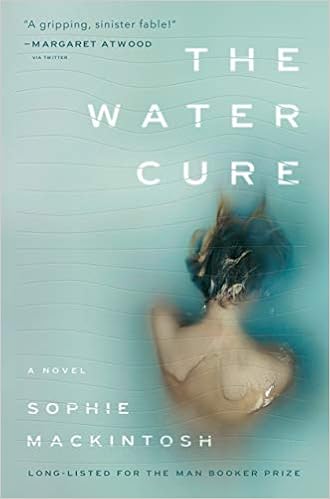
Review: The Water Cure


Rarely do I read anything outside of my approved galleys, due to lack of time and, usually, bitterness at having requested something and been denied. But I had to get my hands on Sophie Mackintosh’s The Water Cure, as I love all things feminine and cultish. Okay, where to even begin? Mackintosh’s debut is stunning from start to end, and I fear any review would be insufficient. It’s not necessarily the subject matter or the characters that are spectacular here, but rather the author’s expertise in construction, from the macro, to the micro level. Every word is precise, yet at the same time, they’re strung together in a fashion that straddles the borders of prose and poetry. The storytelling itself is what is special here– the author’s daring choice to move between narrators and points of view, without being jarring. In this way, the water motif that carries our characters throughout also carries the story along, flowing between perspectives.

Yet, for all of its literary beauty and daring/experimental choices, it’s still cohesive and clear enough so as not to ostracize its reader. There is nothing masturbatory or gratuitous, nor is there anything condescending to the reader. Oftentimes, I find authors to seem as though they’re being off-center for the sake of being off-center, being elusive or controversial in an effort to assert their own, smug intellect. As if the more they confuse the reader, the more they deserve merit. (And hey, I’m not entirely innocent of that elitism myself– just look at my blog name 😉 But there’s none of that with The Water Cure. And, get ready for this, there’s actually a plot. Things actually happen in this novel, despite it being literary. There are physical acts that extend further than mere perambulations, there’s suspense, there’s violence, and even a few twists. It’s truly one of the few books I could recommend to a casual beach reader with as much confidence as I could to a literary snob.

I realize this review doesn’t say much about the actual content of the book, as much as it does the quality, but I’m hoping my enthusiasm will encourage you to read it yourself. Like I said, trying to boil it down to its essential elements would be a disservice. And as a note, you may be tempted to suck it down in one sitting, but temper yourself. Let yourself sip it slowly, savor it. Let the words wash over you. And if you’ve read it, please comment your thoughts– do you agree with me? Disagree? Let’s chat.

Review: 5/5 stars.  (My first five star review of the year, and it’s only January 13th. I’m not sure I had any 5-stars in 2018. Hopefully this bodes well for the rest of 2019– and doesn’t mean that everything is downhill from here.)

Buy The Water Cure on Amazon here. 

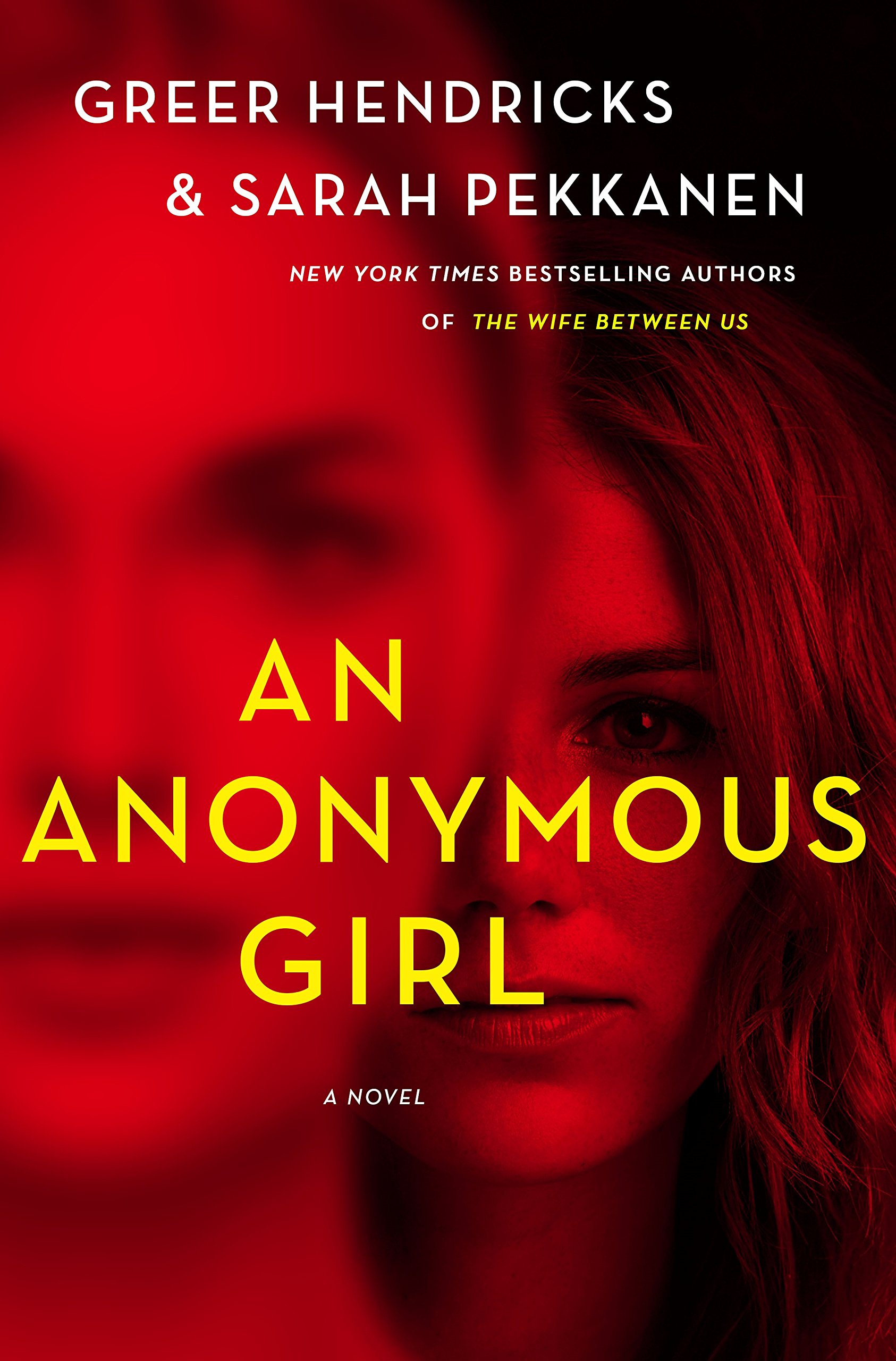
Review: An Anonymous Girl

Image result for an anonymous girl amazon

Let us first acknowledge the elephant in the room: the only thing sillier than the cover art is the title. There. Now those issues are out of the way, we can move on to the book, which is quite a good one. If you’ve been following my reviews on Goodreads, you know I read a lot of female-focused psychological thrillers, so it’s tough to find anything unique, that I haven’t already read ten times before. Even more difficult is finding something that compares to Mary Kubica or Gillian Flynn, who I think are some of the finest authors in the genre— even though I do find quality control issues among their work, too. So often, it feels like psychological thrillers are churned out, without having been edited properly, as if publishers need to feed a voracious audience and are too lazy (or else too swamped) to give any real attention to developing these stories. As a result, much of the fare feels derivative, cliche, melodramatic— even when there’s a good idea at the root, without time and care, that little bulb is not able to blossom into its fullest potential.

Alright, end rant about the genre and focus on the newest effort by Sarah Pekkanan and Greer Hendricks. An Anonymous Girl *cringes at the name* promises exactly the kind of story I enjoy most: full-on psychological thriller, and it mostly delivers. I was immediately hooked, with the introduction of an active protagonist, who is scrappy and a bit morally agnostic. She doesn’t stumble into danger, as is the case in many of these novels; no, she sees an opportunity and takes it, despite the possible dangers, of which she is fully aware. Or, at least, she thinks she’s fully aware, until things begin going off the rails.

 I also loved that from the start, the reader is involved in the experiment and asked to question their own sense of morality. I wish that had been continued a bit more throughout, so that while Jessica is forced to confront her beliefs, her past, and how she should live in the present, so, too are we. 

An Anonymous Girl offers the best sort of cat-and-mouse game, because Jess is not an innocent who gets sucked into a plot. She is smart and savvy and is trying her damndest to out-maneuver her opponent(s), who is/are always just one step ahead. The novel is rife with twists and turns, which last until the very end. Most are successful at building suspense and skirting around expectations, though as it passes the halfway mark, it loses some of its steam. I think that’s the trouble with books that start out so strong: it’s difficult, if not next to impossible, to keep up that level of intrigue. 

Overall, I would definitely recommend checking this one out. I may even check out the authors’ previous bestseller, The Wife Between Us.


Rating: 3.75/5 stars (will round up on Goodreads)

Buy An Anonymous Girl on Amazon here.

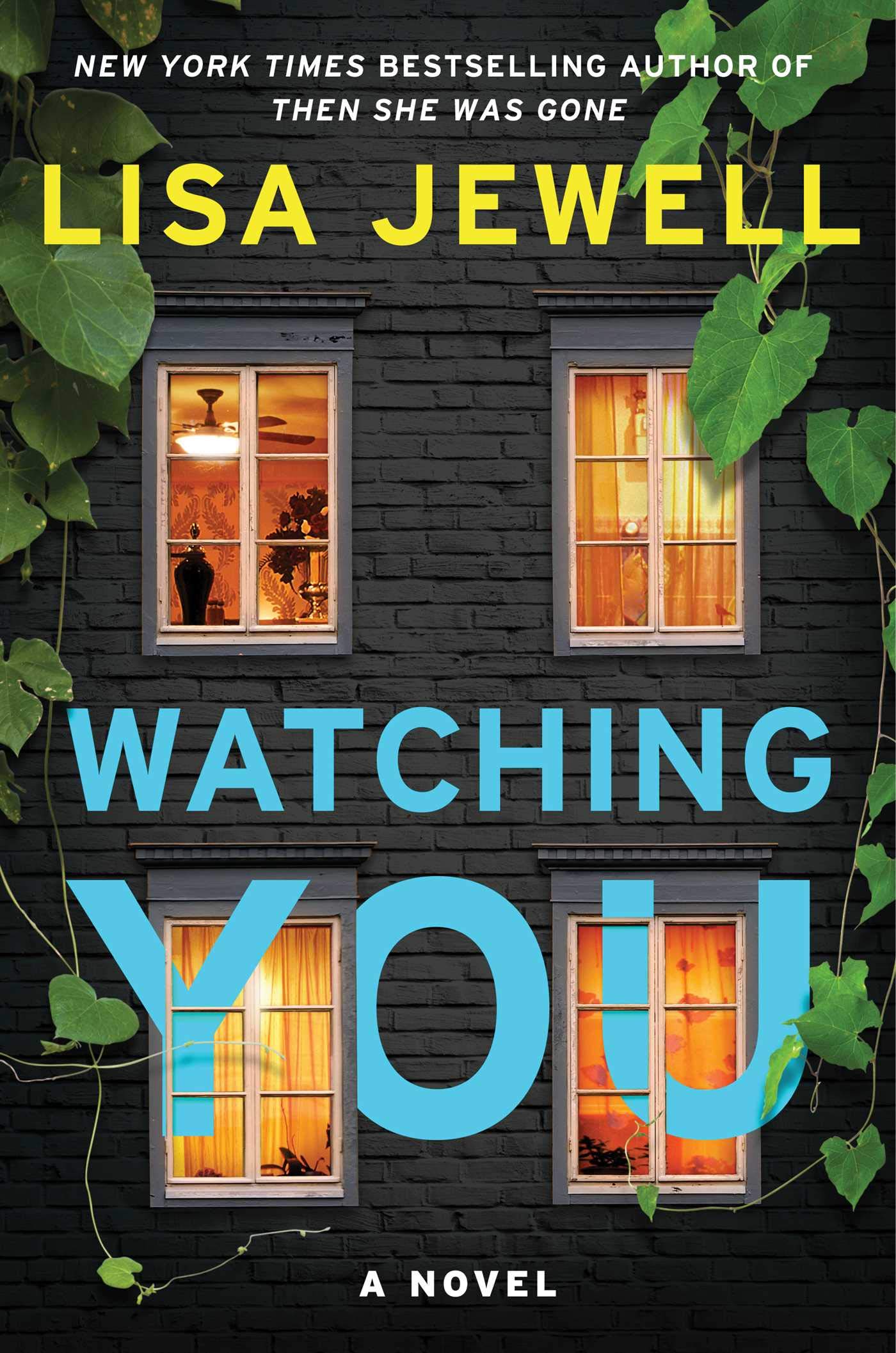
Review: Watching You

I’ve been off the grid for a bit, buried in work, but still managing to fit in my daily reading, albeit at five AM. So prepare yourselves for a whole lotta Snark– whenever it is that I manage to get caught up.

All of that being said, I’m going to move the book I finished this morning to the front of the queue.  Why? Because, ladies and gentlemen, I have been genuinely surprised. It’s not often that my expectations are met– and far less that they’re exceeded. Now, it could be that my expectations have withered away over the past few months, having read so many mediocre books. But I’m going to give this one the benefit of the doubt. Of course, now that I’ve built it up, it’ll be a let down for you. Oh well.

So what’s the book?

Image result for watching you lisa jewell


WATCHING YOU by Lisa Jewell. I had actually forgotten that was the title until now, and I’m realizing that’s probably why my expectations were so low. Don’t judge a book by its [terrible] title, folks. Watching You is about a small neighborhood in Bristol, England, in which everyone seems to be in everyone else’s business– as is the case in most small towns. But we’re quickly introduced to the fact that there has been a murder in this town, and the primary protagonist, Joey, is also the prime suspect. For about half of the book, it’s unclear whether she’s going to be driven to murder the object of her obsessions, or whether the story is about an innocent woman being framed/wrongly convicted. As the story unfolds, twists and turns are revealed regularly, subverting all expectations (I guess this is the theme of our post today). The way the information is revealed and the transitions are both flawlessly executed, with just enough coming out at just the right times, so that everything makes sense  without feeling contrived. There are a few moments that feel too coincidental, but I’ll give those a pass. Jewell’s writing is clear and her characters are multi-dimensional, possessing positive and negative traits that make them seem human. It’s the kind of writing that is made for movie adaptations. There’s no flowery prose in which to get lost, just a driving plot that keeps you turning pages until the very end.

I’ve never read anything by Lisa Jewell, and since I don’t research authors until after I’ve written the majority of my review so as to keep the person separate from the work, but given her long history writing in the genre, it’s making sense that this book is so solid. It definitely reads like the work of a professional– there’s nothing experimental or avant garde here, no sparks of pure brilliance, but it’s very good. The kind of book you’ll have no problems gifting to anyone and everyone.

Rating: 4/5 stars.

Buy Watching You on Amazon here.

Review: How To Be Alone

Thus far, I’ve focused primarily on works of fiction on the blog. It’s hard to be too snarky when it comes to people’s personal stories. When writing reviews and critiques, it’s imperative to separate the art from the artist, or the work from its author, but that’s a difficult task when dealing with memoir and non-fiction. The characters existed and stories happened, and, at least theoretically, authors of these genera can’t do much to change those elements. That being said, I LOVE memoir and nonfiction, and periodically go through phases where it’s all I read. Generally, I’m more drawn in by a memoirist’s point of view of the world and his or her manner of conveying events, rather than the actual events themselves. I like memoirs by characters who are perhaps too intellectual and clever for their own good, who oftentimes see the macabre hilarity in life, people who are strange and slightly off center– if not altogether mentally unstable– with whom I’d like to have dinner. Examples in the memoir/nonfiction/essay space include Augusten Burroughs,  David Foster Wallace, Carrie Fisher, Jenny Lawson, and, on a more serious note, Ayaan Hirsi Ali. In case you haven’t gathered, memoirs of mental illness top my list.
Enter Lane Moore, who is the cutest human, creating relatable comedic material that is so raw, you’ll want to cry and cuddle with her— partly because she point-blank states that she craves comfortable, platonic cuddling, and partly because you’ve realized, while reading, how much you crave it, too. And by the way, yes, I can say a woman is ‘cute’ and still be a feminist. I’m not saying it in a condescending way. I genuinely find Moore’s outlook on life and her sensitivity to be adorable, though by no stretch do I mean to suggest that this precludes her from also being a badass. After all, how many authors have the brass to give their book the same name as a Franzen work, in the same nonfiction space? I can just imagine a (probably male) editor saying “so, Lane, we like all of it– at least all of it we understand and digest– but you do know the title is taken? By none other than Jonathan Franzen…” and her being like “yeah. I know. I like it, though.” end of story.
I have a hunch this book won’t appeal to everyone, and that quite a lot of people will find it “too millennial”; too soft, too much complaining, too much. But that’s also what makes it so special, that it won’t have universal appeal, that an agent and an editor and a publisher (and all the other members of the village it takes to raise a book up from a conceptual stage, through publication), all found the story worthwhile. They saw past profit margins, to the heart, and decided it was more important to publish good writing that would likely only resonate with a niche market. A book that could make an actual difference in. Areader’s life. A book called How to be Alone, that, for a few hours, makes you feel you’re not alone. Someone, a real, living human, also experiences similar emotions, and she’s afraid to express them, yet she pushes past her comfort zone to deliver us this gift.
Rating: 4.5/5 stars, rounded up on Goodreads because 99% of the people on there are assholes or idiots (or a combination of the two) and I want to make sure I’m bringing the average up.

Review: A Well-Behaved Woman

Image result for a well behaved woman

Did you like Z: A Novel of Zelda Fitzgerald? If so, you’re going to love Therese Anne Fowler’s newest historical novel, A Well-Behaved Woman, which offers all of the same historical glitz and glamour, and a strong female protagonist.

Fowler’s heroine is an underdog in high society, a progressive woman from the start, though it is perhaps unintentional at first. Having been born to a family with little wealth, and not being able to rely solely on her looks, Alva Smith used her cleverness to maneuver her way into one of the richest families in the world. Unlike her playboy husband, who is mostly useless and spent his time galavanting around the world, Alva sought meaning in her life, pursuing a life that was deemed inappropriate and positively un-feminine by society.  Instead of accepting her role as a housewife, she boldly pursued her passions of architecture and social equality, including being a champion specifically for African Americans. She later goes on to be accused of being an “architect of society’s downfall” for her decision to *gasp* procure a divorce from her husband.

Stories of women’s insubordination and refusal to quietly comply with the “rules” of patriarchal society are always timely, evergreen, but no more so than today.  That being said, one of the greatest things about this book is that Fowler allows the feminist angle to emerge organically. Towards the end, it gets a bit heavy-handed, but it’s justified as it reflects the protagonist’s true turn towards the women’s suffrage movement. Throughout most of the novel, we’re invited into an otherwise-exclusive world, but its pitfalls– especially for women– are apparent throughout. Though the environment is glamorous, the unfortunate treatment of women, minorities, and the poor are on full display. In such a seemingly romantic era, all the more so given the grandiose homes and affairs, it’s striking how little love exists. Love, Money, or Titles: ladies, take your pick. While men of status were permitted to sink ships, sleep with whoever they pleased, and generally do as they pleased, a single misstep by one of their wives or daughters could result in a permanent fall from grace. Fowler points out the horrific hypocrisy, as it applied to Alva, that “Society loved her when she was advancing its causes, then castigated her when she was advancing her own. Yet, were not the two ever entwined?”

One of my favorite moments of the book is at the end, when Alva is standing with her husband, her former maid, Mary, and Mary’s husband, the latter two of whom are African American:

“Will you look at us? Four people of exceptional quality and intellect, three of whom began life as the property of wealthy white men. Not to say that our situations were equal. I just mean to demonstrate that all sorts of societal wrongs can be improved.”

How interesting is that observation? As a creative who subscribes to the notion that stories say more about the time in which they are created than they do about the time in which they are set, I think this quote is most emblematic of the connections between societal issues then and now.


Rating: 4/5 stars

Buy A Well-Behaved Woman on Amazon here.

Review: You Think It, I’ll Say It

I’ve been off the grid for the past 10 days or so, as it was my birthday AND I was reading some older stuff. Namely, Curtis Sittenfeld’s American Wife. Boy was that one tough for me. Ten days to read a book? Not my style. I wrote a full review on Goodreads, but given that it came out so long ago, I’m going to review Sittenfeld’s newest effort, You Think It, I’ll Say It, instead.


Image result for you think it, i'll say it

Short stories are tough for me– I don’t always connect with characters, so when I do find myself drawn to a protagonist or a world painted by an author, I want to remain there for more than 20, 30, 40 pages. Of course, it works rather well when I don’t connect, as I know I’ll be able to move on fairly quickly, but that doesn’t make me any more fond of short story collections.

Despite all of this, Curtis Sittenfeld’s You Think It, I’ll Say It was an enjoyable read. I thoroughly enjoyed the various women and their situations, as they felt just common enough to be relatable, yet offered a unique perspective or twist. I often found myself thinking that I could see myself on various sides.

My favorite story was Bad Latch, in which the middle-class, pregnant narrator feels competitive with (and lacking next to) another expectant mother in her prenatal yoga class. Though I’ve not yet been pregnant, this scenario of feeling less-than, particularly when it comes to mothering, is so easy so imagine, especially in the way Sittenfeld paints it. But the magic isn’t just that we can put ourselves in the narrator’s shoes, it’s that we can just as easily empathize with Gretchen, the ostensibly “perfect” mommy, who plans to give birth naturally.

I also found Off the Record to be especially accessible and relevant to today’s culture. Again, both sides here are easy to grasp and the multitude of feelings, the depth Sittenfeld creates within a short span, is impeccable. I think the overall takeaway from this collection, for me, is reinforcing that saying “comparison is the death of joy” (commonly attributed to Mark Twain, but I no longer trust the internet as a source). Many of the stories deal with tiny jealousies that become insidious, and all the more so because they’re often imagined rather than based in any reality.


Rating: 3.5/5

Buy You Think It, I’ll Say It on Amazon here